
You’re Not Supposed to Figure It Out Alone
The questions to ask at your baby’s first paediatrician visit cover feeding, sleep safety, warning signs, vaccinations and how to reach the practice between visits. You don’t need a perfect list. You need a few honest ones.
That first appointment feels heavy. It’s short. Your head is full. And somehow you’re expected to remember everything.
Sound familiar?
- Is my baby feeding enough?
- Is this crying normal?
- Should I wake her for feeds?
- What if I forget the one thing that matters?
At Learning Motherhood, we’ve watched the same story play out: parents leave a short doctor’s appointment relieved about one concern but carrying home ten new questions. That isn’t a failure on your part. It’s what a short appointment does to a full mind.
So here’s the reframe. You’re not there to impress anyone. You’re there to start continuity, an ongoing relationship with someone who knows your baby. One appointment can’t hold everything, but it can be the foundation of your journey.
★ You don’t have to get it all right today. You just have to start the conversation.

★ The Questions That Actually Matter
The questions that matter most at a first visit are about feeding, sleep safety, what’s normal for your baby’s body, and your own wellbeing. Start with what’s keeping you up at night.
For now, here’s your starter list.
What should I ask about feeding?
Ask how you’ll know feeding is going well, what’s a worry, and when to call. Feeding is often the biggest source of first-week anxiety.
Try these:
- How many feeds and wet nappies should I expect each day?
- How will I know my baby is getting enough?
- What does a good latch or bottle feed look like?
- When should I call you about feeding?
- Who can I ask about breastfeeding challenges?
That last one matters. A paediatrician looks at your baby’s growth, while a lactation specialist helps with the how of feeding. Knowing who to turn to saves you a lot of guessing.
What should I ask about sleep?
Ask what a safe sleep setup looks like and what sleep patterns to expect right now. Safety comes first, sanity second.
Most newborns sleep a lot in the first two weeks, often 16 to 18 hours a day, but rarely for more than 2 to 3 hours at a stretch. Ask your paediatrician what that looks like for your baby specifically.
Questions worth writing down:
- What’s the safest way to put my baby down to sleep?
- How often should I wake my baby to feed?
- Is a 45-minute nap actually a nap, or just a long feed with the lights off?
What should I ask about my baby’s body?
Ask what’s typical for skin, stools, breathing, umbilical stump care and crying, and which changes mean you should call. Newborns are full of surprises.
Some patterns are normal but alarming. Ask your doctor what’s expected, what’s not, and the specific signs that should prompt a call.
Also ask about the vaccination schedule, and what to do if you’re unsure which date applies to you.
Does my own mental health belong at the first visit?
Yes, your own wellbeing belongs in this conversation, because a parent who’s coping badly can’t settle well. It counts.
Tell the doctor if you’re exhausted, tearful or overwhelmed. If you’re not sure who to ask about your own recovery, say so.
★ None of these questions are extras. They’re the job.
★ How to Ask Without Feeling Awkward
The easiest way to ask without feeling awkward is to write your questions down beforehand and say them out loud, one at a time. Your paediatrician has heard it all.
What if my question sounds silly?
Your question isn’t silly, because every question about your baby matters. A doctor’s job is to guide, not judge.
Here’s the trick that works every time. Start with: “This might sound silly, but…” Then ask anyway.
Put the one you’re most embarrassed about at the top of your list. Get it out first.
When should I push back or ask again?
Ask again whenever an answer leaves you confused, and say so plainly. “Can you explain that another way?” is a perfectly good sentence.
Try these:
- “Can you say that in plain language?”
- “What exactly should I watch for?”
- “What would make you want to see us sooner?”
Your instincts count. If something still feels off, say it again.
How do I ask a paediatrician questions online between visits?
You can ask a paediatrician questions online through the practice’s patient portal or messaging system, or through a private support system alongside it. Response times vary, so ask what to expect.
At that first visit, ask:
- Does the practice have an online portal or messaging option?
- How quickly do you usually reply?
- What counts as urgent, and what number do I call?
- Who covers after hours?
If something feels urgent, call your practice or local emergency services first.
★ Asking later isn’t a sign you forgot. It’s a sign your baby is growing and so are your questions.
★ Spotting the Right Fit, or Knowing When to Walk
You’ll know a paediatrician is the right fit when they listen fully, explain things plainly, and treat you as a partner. Trust that feeling.
What are the green flags in that first conversation?
Green flags are a doctor who listens without interrupting, answers in plain language, and respects your preferences. You should feel like a partner, not a passenger.
Notice whether they:
- Let you finish your questions
- Explain terms without being asked
- Tell you clearly how to reach them between visits
- Welcome follow-up questions
- Respect how you want to feed and care for your baby
What are the red flags?
Red flags are consistently dismissing your instincts, rushing every appointment, using jargon without explanation, or making you feel foolish. One rough moment isn’t a pattern.
Look for repeat behaviour:
- You leave feeling smaller than you arrived
- Your concerns get brushed off again and again
- You can’t get a clear answer on after-hours care
If that’s happening, it’s fine to look for a different paediatrician. That’s not rude. It’s advocacy.
Do my instincts really matter?
Yes, your instincts deserve a seat at the table, because you know your baby’s everyday patterns better than anyone. A good doctor will want to hear them.
You don’t need medical training to notice that something has changed. Say what you’ve seen. “She’s feeding differently than yesterday” is real information.
★ The right fit isn’t the most impressive doctor. It’s the one who makes you feel heard.
★ Leaving With That Kind of Calm
You leave calm when you walk out with answers, a plan for between visits, and people to turn to. That kind of calm comes from knowing where to go next.
What should I bring to make the visit productive?
Bring your written questions, a feeding and sleep log, any hospital discharge paperwork, and notes on anything that worried you. Phone notes work fine.
A simple checklist:
- Your list of questions, with the most important first
- A rough log of feeds, nappies and sleep
- Discharge papers from the hospital
- Notes on anything that felt off
What’s my between-visits plan?
Your between-visits plan is knowing, before you leave, how to reach the practice for non-urgent questions, urgent worries and after-hours cover. Clarify it at that first appointment.
Ask the receptionist or doctor to spell it out. Then save the numbers in your phone. That’s how you never wonder alone again.
How do I build your panel of support?
You build your panel by gathering the right people around your baby and yourself: a paediatrician, plus feeding and recovery support when you need it. Everyone doesn’t have to sit in one clinic.
At Learning Motherhood, we say we built the panel we wished existed for our own families.
Because no parent should have to figure it out alone.
Frequently Asked Questions
What questions should I ask at my baby’s first paediatrician visit?
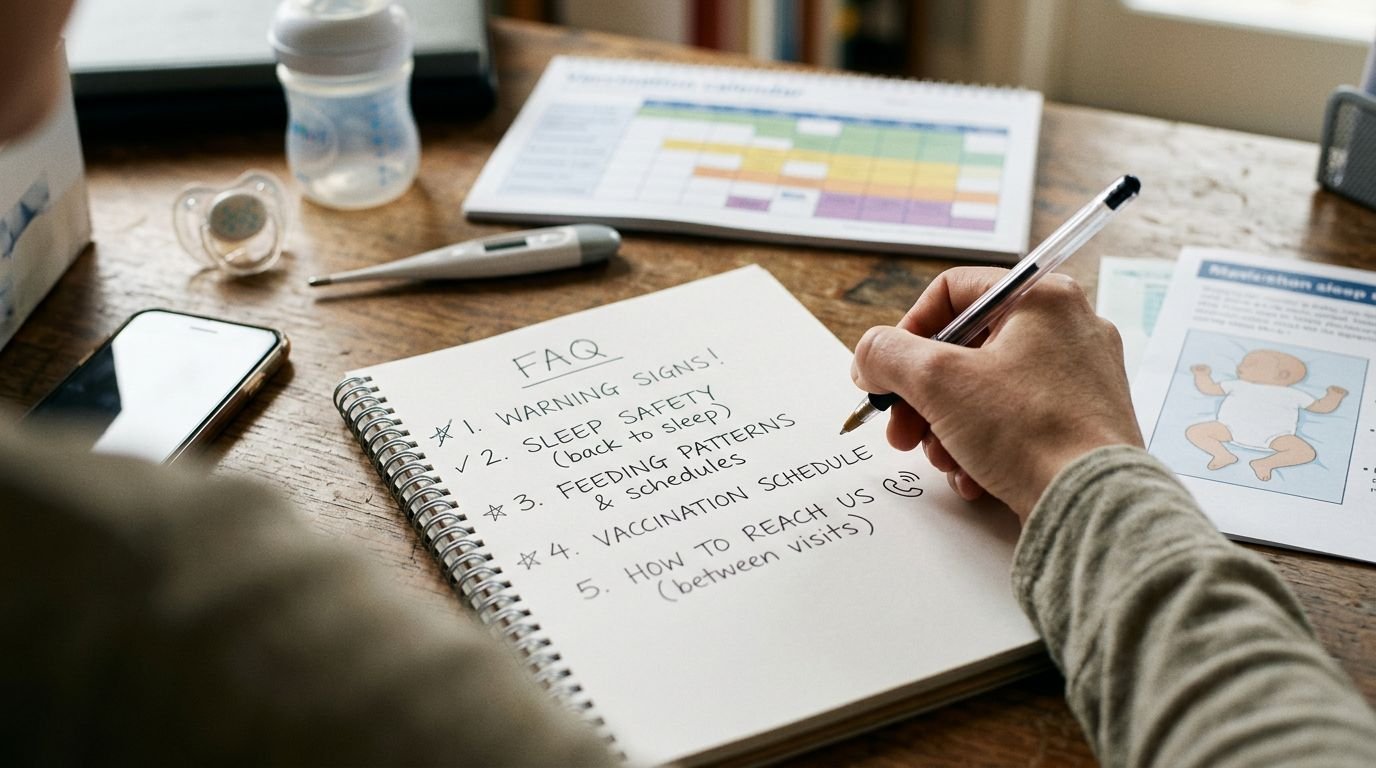
Focus on feeding patterns, sleep safety, warning signs, the vaccination schedule, and how to reach the practice between visits. Write them down and put the most important first. You can always add more later.
How do I ask a paediatrician questions online if I think of something later?
Many practices offer a patient portal or messaging system, though response times vary. Ask at your first visit how it works and what counts as urgent. Some parents also use a private support system for trusted answers while they wait for a reply.
What if I’m embarrassed by my questions?
Every question about your baby matters, so ask it anyway. Write your questions down beforehand and start with the one you’re most nervous about. Your paediatrician’s job is to guide, not judge.
How can I tell if this paediatrician is the right fit?
Notice whether they listen fully, explain things in plain language, and respect your preferences. You should feel like a partner in your baby’s care. If you leave feeling dismissed more than once, it’s fine to look elsewhere.
What should I bring to the first visit?
Bring your list of questions, your baby’s feeding and sleep log, any hospital discharge paperwork, and notes on anything that worried you. Having it all written down means you won’t have to rely on memory.
How do I follow up on concerns between visits?
Ask at the first appointment how the practice handles non-urgent questions, urgent worries and after-hours cover. Save those details somewhere easy to find. Then you’ll know exactly where to turn.
You’ve already done the hardest part by getting ready. If a question pops up tomorrow.
Ask a Free Question